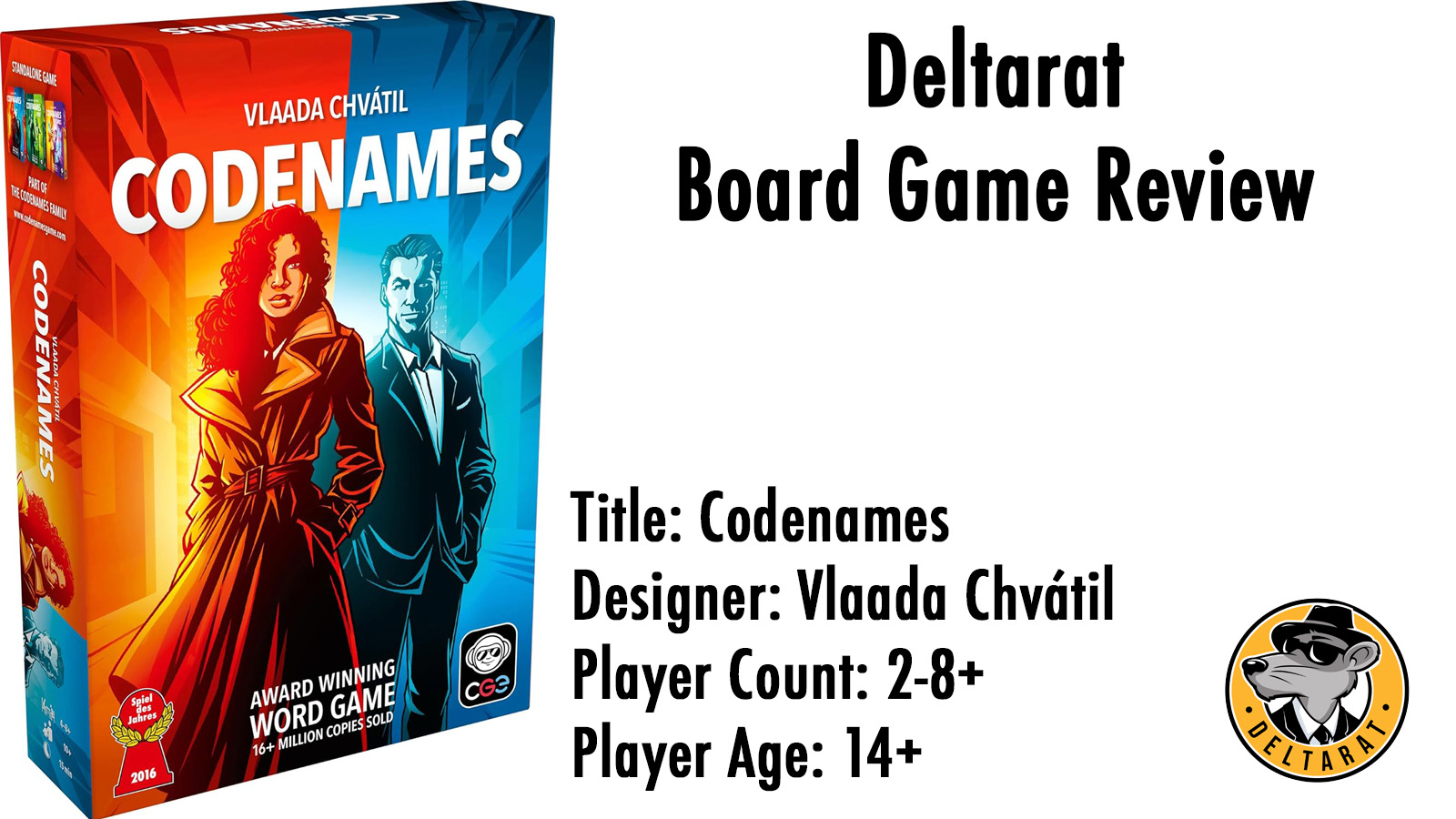
Codenames - An Overview
Codenames is a team-based word game that exploded onto the board gaming scene when it was released, and for good reason. It is one of those games that keeps showing up in top ten gaming lists all over YouTube. It’s quick to learn, addicting to play, and very replayable.
Codenames - How It Plays
Codenames is a 4-player game. That’s not official. You can play with more than four, but…trust me. It’s a four-player game.
Players split into two teams of two. Each team has a clue giver and a clue guesser. Again, not official. I think they’re actually called the Spymaster and Field Operative…but…clue giver and clue guesser.
The teams take turns giving clues to their teammates in an attempt to get them to guess specific words that are randomly drawn and laid out on a grid. The Spymaster, a.k.a. clue giver, uses a key card to know which words on the grid their teammate needs to guess.
Trust me. It’s way more fun than it sounds.
Codenames - What Makes It Fun
Codenames is very well-designed. One brilliant part of the design is the way you really have to think when giving a clue to your teammate. You’re trying to give your teammate clues to help them select the correct words. Sometimes, your teammate can interpret a clue in a way that helps the other team.
For example, there will be a word on the table that you need your teammate to guess correctly, but there are also words that you don’t want your teammate to guess because guessing your opponent’s word gives them that correct guess.
So, just don’t give clues that will cause your teammate to guess an opponent’s word, right? It’s not that easy. This is because many of the words will be closely related.
Let’s say one of the words you need your teammate to guess is “guitar”. You might give the clue, “instrument”. That would be a good clue, unless of course one of your opponent’s words is “saxophone”. Giving the “instrument” clue could cause your teammate to select “saxophone”, which belongs to the other team and gets them one step closer to winning.
Not only do you need to avoid giving clues that will cause your teammate to guess one of your opponent’s words, there is also a word on the table that both teams need to avoid. This is called the assassin.
If a clue guesser selects that word, the team that selected it will instantly lose the game. There will be clues you want to give, but you realize those clues may cause your teammate to guess the assassin word, so you are forced to rethink your clues.
Another thing that makes Codenames fun is the dynamic between the clue giver and the clue guesser. You can’t just give clues you think are good clues. You have to give clues the clue guesser will think are good. In other words, you have to try to think the way your teammate will think.
Sometimes, you may have a shared experience or inside joke that gives you and your teammate an advantage. If you’re trying to get your teammate to pick the word “airplane” and you can give them a clue like “goat” because of a shared story the two of you have involving a goat and an airplane, well, you just earned your team a correct guess and did so without giving any new information to your opponents because…goat and airplane.
Those are just a few examples of how this game forces you to think creatively. Many times, the results are hilarious!
Codenames - Things to Consider
Codenames can technically play more than four players, but I have found that, with more than four, things can get a little chaotic.
With more than four players, you simply have more clue guessers on each team. I feel like this is just a way the game designers can say the game plays more than four players. In my opinion, more than four players just causes the turns to take longer because the extra clue guessers are discussing what words to guess. If you have more than four players, maybe have a game of Codenames going with another game like Lost Cities. That works because both of those games usually take around the same time to play.
Codenames can also suffer from what I like to call the eyeline issue. The eyeline issue is what happens when players can see what another player is looking at, giving them an advantage in the game.
For example, in Codenames, the clue giver has to look at the grid of words laid out on the table to select what clues they want to give for those words. If a player identifies the word the clue giver is looking at, they can more easily connect the clue to the correct word.
One way to counter this issue is to make a house rule or playing habit so the clue givers understand not to stare down the word they want their teammate to guess.
When giving a clue, glance over the entire grid of words on the table. Doing so makes it nearly impossible to identify which word the clue giver is giving the clue for. Also, once the clue giver knows the word they will be giving the clue for, not looking at the grid at all helps with this. These are just two examples I’ve found to deal with the eyeline issue.
There are also different versions of Codenames. For example, there’s a Disney version and a version where pictures are used instead of words. I’ve played the pictures version and ended up selling it. It was fine, but if I’m going to play Codenames, I would rather play the original version.
Codenames - Conclusion and Rating
Codenames is another one of those games that people play over and over again. There are usually some laugh-out-loud moments and the game can create stories that are told at future game nights.
Sometimes, a clue giver gives a clue that they immediately regret. They see a word that belongs to their opponent that they didn’t see before giving the clue. Watching them drop their head to the table because they don’t want to watch their teammate pick the opponent’s word is all you need to see to know they just messed up, LOL!
Also, since both clue givers know exactly which words belong to which team, they both know what each other is attempting to do when giving the clues. It’s like a whole other little game being played just between the clue givers. It can be hilarious for a clue giver to watch the other struggle to give a clue to their teammate. The reason it’s so funny is because, as the other clue giver, you know exactly why they’re struggling.
The game is fantastic. It’s hard to play just once. The replayability is insane. The game changes depending on who is giving the clues and who is guessing.
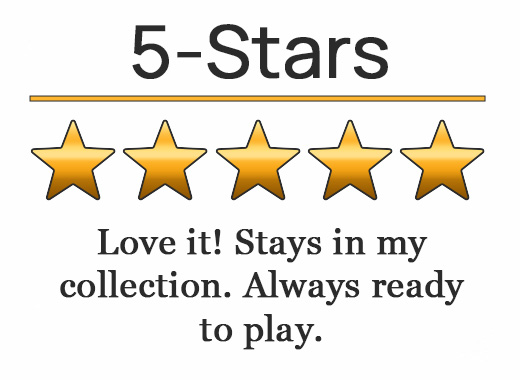
It’s a great game and it will always have a place on my shelf.
Find It Here
View ProductAffiliate link — I may earn a commission from qualifying purchases at no additional cost to you.